
Earth’s Mightiest Dysfunctional Team! What Boards Can Learn from the Avengers

They’ve saved the world multiple times. They’ve stared down alien invasions, genocidal AIs, and a purple titan with a gauntlet full of infinity stones. Yet for all their victories, the Avengers may be one of the most dysfunctional teams in popular culture.
As a leadership case study, they’re fascinating. Because if even superheroes, armed with genius, courage, and literal god-like powers, struggle to work effectively as a team, what hope is there for the rest of us?
Quite a lot, actually. But only if we’re willing to be honest about what makes teams succeed or, crucially, fail.
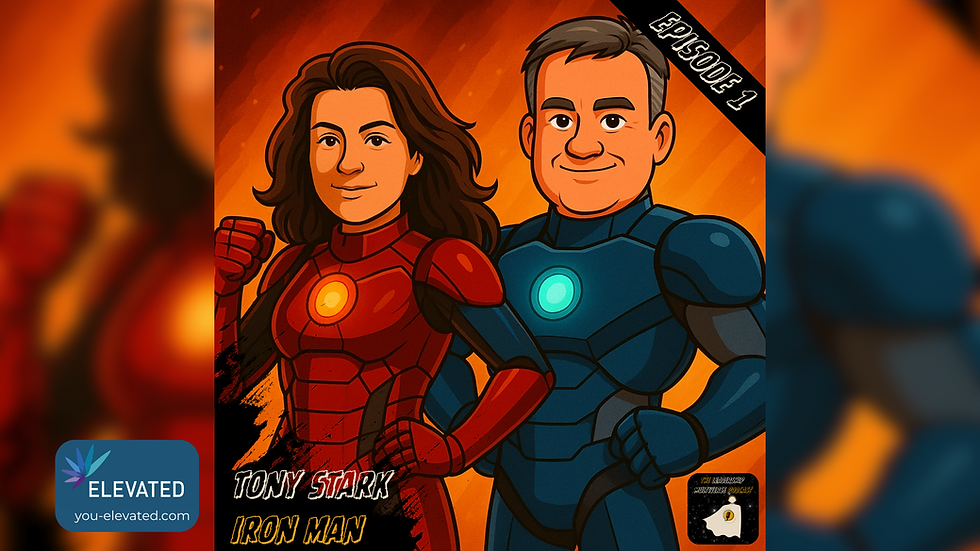
In our latest Leadership Multiverse podcast episode, Ellen and I explored the Avengers not as Marvel fans, but as leadership practitioners. What emerged was less a celebration of their heroism and more a sobering reminder of how fragile teams can be when trust, accountability, and culture are missing.
Nick Fury’s Grenade: The Perils of Manipulative Recruitment
The Avengers didn’t form organically. They weren’t a group that shared values or built trust over time. They were thrown together by Nick Fury, a leader who believed manipulation and secrets were more effective than transparency.
Take the first Avengers film: Fury literally waves Agent Coulson’s bloodied playing cards as a motivational tool, despite the fact they weren’t even found on Coulson’s body. He fabricated an emotional trigger to force cohesion.
Boards and executive teams see this too often. Leaders try to “engineer” motivation through fear, guilt, or selective truth. It may spark short-term results, but it leaves cracks in the foundation.
Trust: The Missing Superpower
Patrick Lencioni’s Five Dysfunctions of a Team begins with the absence of trust. Without it, vulnerability is impossible. And without vulnerability, there can be no meaningful conflict, no real accountability, and no commitment to collective results. The Avengers embody this perfectly:
Tony Stark creates Ultron in secret, convinced he alone can “protect the world.”
Steve Rogers hides the truth about the Winter Soldier’s role in Tony’s parents’ deaths.
Bruce Banner isolates himself, unable to share the full reality of the Hulk.
Natasha Romanoff shields her past from even her closest teammates.
They trust each other physically (they’ll cover each other’s backs in battle) but they don’t trust each other emotionally. And that distinction is critical. Boards that trust each other only to “do the job” but not to “share the doubts” are doomed to the same cycle of dysfunction.
Conflict Avoidance and the Civil War That Followed
Because trust is missing, conflict never happens constructively. Stark and Rogers’ philosophical rift (authoritarian control versus principled freedom) is never resolved in dialogue. Instead, it festers until it explodes into open war in Captain America: Civil War. In boardrooms, unresolved tensions don’t usually end in fistfights at airports, but the consequences are just as damaging:
Passive-aggressive silences
Factions forming behind the scenes
Paralysis when decisions need to be made
Avoiding conflict doesn’t preserve harmony; it breeds dysfunction.
Crisis-Driven Performance: The Tuckman Loop
Bruce Tuckman’s stages of team development (forming, storming, norming, performing, and adjourning) should help teams move forward. But the Avengers seem locked in a perpetual loop: every film they form, storm, perform, then splinter apart again. They only work together when the world is literally ending. Once the crisis passes, so does their cohesion. Sound familiar? Many boards and leadership teams demonstrate exactly the same pattern. They pull together in a crisis, such as financial collapse, regulatory intervention, reputational threat, but never invest in building the culture that sustains performance in calmer times.
Crisis-driven effectiveness is not the same as high performance.
The Role of Ego
Ego is the other great destabiliser:
Tony Stark is brilliant but self-absorbed.
Steve Rogers is principled but equally stubborn.
Thor often prioritises vengeance over collective goals.
When leaders are more concerned with being right or being seen than with achieving results, the team suffers. Boards that prize status over substance, or individual wins over collective responsibility, will always underperform.
The Unsung Leaders: Black Widow and Hawkeye
Ironically, the two Avengers without superpowers may be the best examples of authentic leadership:
Natasha Romanoff (Black Widow) acts as the emotional glue. She recruits Bruce, builds bridges across the team, and sacrifices herself for the mission. She rarely competes for dominance; instead, she creates connection.
Clint Barton (Hawkeye), mocked for being “just a guy with a bow,” provides grounding. His farmhouse scene in Age of Ultron reminds us that the “ordinary” often provides the anchor a team desperately needs.
Boards could learn much here. True leadership isn’t always flashy or loud. Sometimes the quiet connectors, i.e., the ones who ask the right questions, who draw others out, who keep the group tethered to reality, are the ones who hold the team together.
What the Avengers Teach Us About Boards
Strip away the spandex and the aliens, and the Avengers mirror many boards of directors and executive teams:
Thrown together by necessity, not culture: assembled for a mission, not because of shared trust.
Reliant on crisis to perform: effective only when forced into action by existential threats.
Dominated by ego: loud voices overshadow quieter but equally valuable perspectives.
Lacking psychological safety: teammates unwilling to be vulnerable or admit weakness.
Blind to hidden leadership: overlooking the emotional glue that keeps them together.
The Bottom Line
Not every team can be saved. Some combinations of talent, ego, and trauma are simply toxic. But most boards don’t face alien invasions. They face strategic decisions, cultural challenges, and accountability to members or shareholders.
The lesson of the Avengers is that talent is not enough. You can assemble the brightest minds, the biggest reputations, and the most impressive CVs but without trust, accountability, and a shared culture, you don’t have a team. You have a fragile coalition waiting for the next crisis. So, the next time you sit at the board table, ask yourself:
Do we trust each other enough to be vulnerable?
Do we resolve conflict, or avoid it?
Are we investing in team culture when the crisis isn’t burning?
Because if even Earth’s Mightiest Heroes can fall apart without those things, your organisation probably can too.


Comments